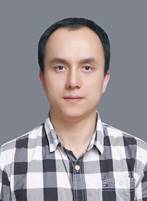
姓名:胡书山
电子邮箱:shushan.hu@hubu.edu.cn
职称:副教授/硕导
职务:人工智能学院副院长(负责科研、行政)
研究方向:大模型、深度神经网络、深度强化学习。
入选省级人才计划,中国计算机学会YOCSEF武汉副主席。主要研究领域:基于大模型医学影像图片分析以及生物信息计算方法,基于深度强化学习骨科外骨骼机器人控制算法,基于深度强化学习建筑能耗设备智能控制算法。截至目前主持国家级项目1项,省部级科研项目3项,横向应用科研项目5项,获得省级科技进步二等奖1项,授权发明专利8项,已提交发明专利6项,发表高水平研究论文22篇,其中SCI期刊论文13篇,获批软件著作权15项。
教育及工作经历:
2005年-2009年本科武汉大学
2009年-2011年硕士武汉大学
2011年-2014年博士武汉大学
2012年-2013年博士(联合培养)都柏林城市大学(爱尔兰)
2014年- 2016年博士后都柏林大学(爱尔兰)
2016年-2017年讲师 湖北大学
2017年-现在副教授湖北大学
主持科研项目
(1)国家自然科学基金项目:时空数据环境下基于深度级联生成对抗网络的建筑能耗预测方法研究,2022.01-2024.12。
(2)贵州省重大科技专项:基于国产智算平台的产业转型省级行业大模型关键技术研究,2025.08-2028.07。
(3)湖北省自然科学基金项目:基于语义网和模糊网络分析建筑能效分析研究,2018.01-2019.12。
(4)企业委托大型应用研发项目:梁结构全周期健康监测大数据存储与可视化平台,2025.12-2026.12。
(5)教育部协同育人项目:基于翻转课堂的《数据结构》教学模式探索与实践,2017.01-2018.12。
获奖情况
(1)2020年,《复杂工业场景下的视觉认知与智能服务关键技术及应用》获湖北省科技进步二等奖。
论文代表作
1.Haitao Fu, Maojun Gan, Fan Li, Biyong Deng,Shushan Hu, DMCRL: Deep Multi-View Contrastive Representation Learning for Drug-Target Affinity Prediction, IEEE International Conference on Bioinformatics and Biomedicine (BIBM) (CCF B), 2025.
2.Fan Li, Xiaotong Shi, Maojun Gan, Haitao Fu,Shushan Hu, MOIRL: A Multi-Objective Inverse Reinforcement Learning-Driven Model for Therapeutic Peptide Generation, IEEE International Conference on Bioinformatics and Biomedicine (BIBM) (CCF B), 2025.
3.Biyong Deng, Jiashan Pan, Xiaoyu Tang, Haitao Fu,Shushan Hu, multi-view graph neural network approach for magnetic resonance imaging-based diagnosis of knee injuries, 2025, 5, 201-210.
4.Zhiqiang Chen, Liang Yu , Shuang Zhang,Shushan Hu, and Chao Shen,Multiagent Hierarchical Deep Reinforcement Learning for Operation Optimization of Grid-Interactive Efficient Commercial Buildings, IEEE Transactions onArtificial Intelligence(SCI), 2024;
5.Shushan Hu, Peng Wang, Liang Yu, Cathal Hoare, and James O’Donnell, Building Occupancy Detection and Localisation using Deep Learning for Surveillance Video, IEEEInternet of Things Journal(一区SCI,影响因子: 10.238), 2023, 1-1;
6.Shushan Hu, Jiale Wang, Cathal Hore, Yehong Li, Pieter Pauwel, James O’Donnell, Indoor environmental quality and building energy performance assessment using linked data and cross-domain semantic reasoning,Automation in Construction(一区SCI,影响因子: 10.517), 2021,124: 103580;
7.Yehong Li,Shushan Hu, Cathal Hore, James O'Donnell, An information sharing strategy based on linked data for net zero energy buildings and clusters, Automation in Construction(一区SCI,影响因子: 10.517), 2021, 124: 103592;
8.Shushan Hu, Cathal Hore, James O’Donnell, Building performance assessment using scenario modelling and fuzzy analytic network process, Applied Energy(一区SCI,影响因子: 11.446),2019;
9.Shushan Hu, Edward Corry, Matthew Horrigan, Cathal Hore, Mathilde Dos Reis, James O’Donnell, Building performance evaluation using OpenMath and Linked Data, Energy and Buildings(一区SCI,影响因子: 7.201), 2018,174,484-494;
10.Shushan Hu, Edward Corry, Edward Curry, William Turner, James O’Donnell, Building performance optimisation: A hybrid architecture for the integration of contextual information and time series data, Automation in Construction(一区SCI,影响因子: 10.517), 2016, 70: 50-60;
11.Edward Corry, Pieter Pauwels,Shushan Hu, Marcus Keane, James O'Donnell, A performance assessment ontology for the environmental and energy management of buildings, Automation in Construction(一区SCI,影响因子: 10.517), 2015,57: 249-259;
12.Shushan Hu, Feng Liu, Cunchen Tang, Xiaojun Wang, and Huaibei Zhou, Assessing Chinese campus building energy performance using fuzzy analytic network approach, Journal of Intelligent & Fuzzy Systems(三区SCI,影响因子: 1.737), 2015, 29: 2629-2638.
13.Shushan Hu; Feng Liu; Cunchen Tang; Xiaojun Wang, A flexible and robust wireless home network structure, International Journal of Sensor Networks(四区SCI,影响因子: 1.264), 2016, 21(2): 116~126;
14.Shushan Hu; Cunchen Tang; Feng Liu; Xiaojun Wang, A Distributed and Efficient System Architecture for Smart Home, International Journal of Sensor Networks(四区SCI,影响因子: 1.264), 2016, 20(2): 119~130;
国家发明专利
(1)专利号授权号ZL201810579936.2:一种基于语义网进行建筑能效分析的方法及装置
(2)专利授权号ZL201910329456.5:基于卷积神经网络与多视角图的三维模型检索方法及装置
(3)专利号授权号ZL201910289962.6:一种语音主动降噪的方法及装置
(4)专利号授权号ZL201810579422.7:一种建筑信息模型与建筑能耗模拟模型的转换方法及装置
(5)专利号授权号ZL201911139116.2:基于混合语义推理技术的建筑能效评估方法及系统
(6)专利号授权号ZL202010964722.4:基于深度级联神经网络的建筑能耗时空因子表征方法
(7)专利号授权号ZL 2020 1 0964722.4:基于深度级联生成对抗网络的建筑能耗预测方法
(8)专利号授权号ZL 2020 1 0956592.X:基于深度级联神经网络的建筑能耗时空因子表征方法
(9)申请公布号CN108984830A:一种基于模糊网络分析的建筑能效评价方法及装置
(10)申请公布号CN117457187A:基于人工智能的骨科病变辅助诊断方法
(11)申请公布号CN120495763A:一种基于滑动注意力神经网络的半月板撕裂诊断方法